Uncle Ben
Uncle Ben is Willy Loman's older brother, a figure of ruthless success and adventure who embodies the wealth and decisiveness Willy lacks. He appears primarily as a memory and a haunting ideal, representing the path not taken—the jungle of opportunity where one can emerge rich at twenty-one. His brief, authoritative visits in Willy's mind serve as a moral and psychological counterpoint, exposing the emptiness of Willy's own dreams and ultimately helping to justify Willy's final, fatal decision.
Identity and Background
Uncle Ben is a stolid man in his sixties, with a mustache and an authoritative air, utterly certain of his destiny and carrying an aura of far places. He is the son of a great and wild-hearted man who made and sold flutes, traveling across the country in a wagon. Ben's father abandoned the family when Ben and Willy were very young, and Ben himself set out to find him, first heading due south by mistake and ending up in Africa instead of Alaska. There, on the Gold Coast, he discovered diamond mines. By the age of seventeen he walked into the jungle, and by twenty-one he walked out rich. He has never kept books for his many enterprises, and he moves through the world with the confidence of a man who knows the answers.
Life and Plot Trajectory
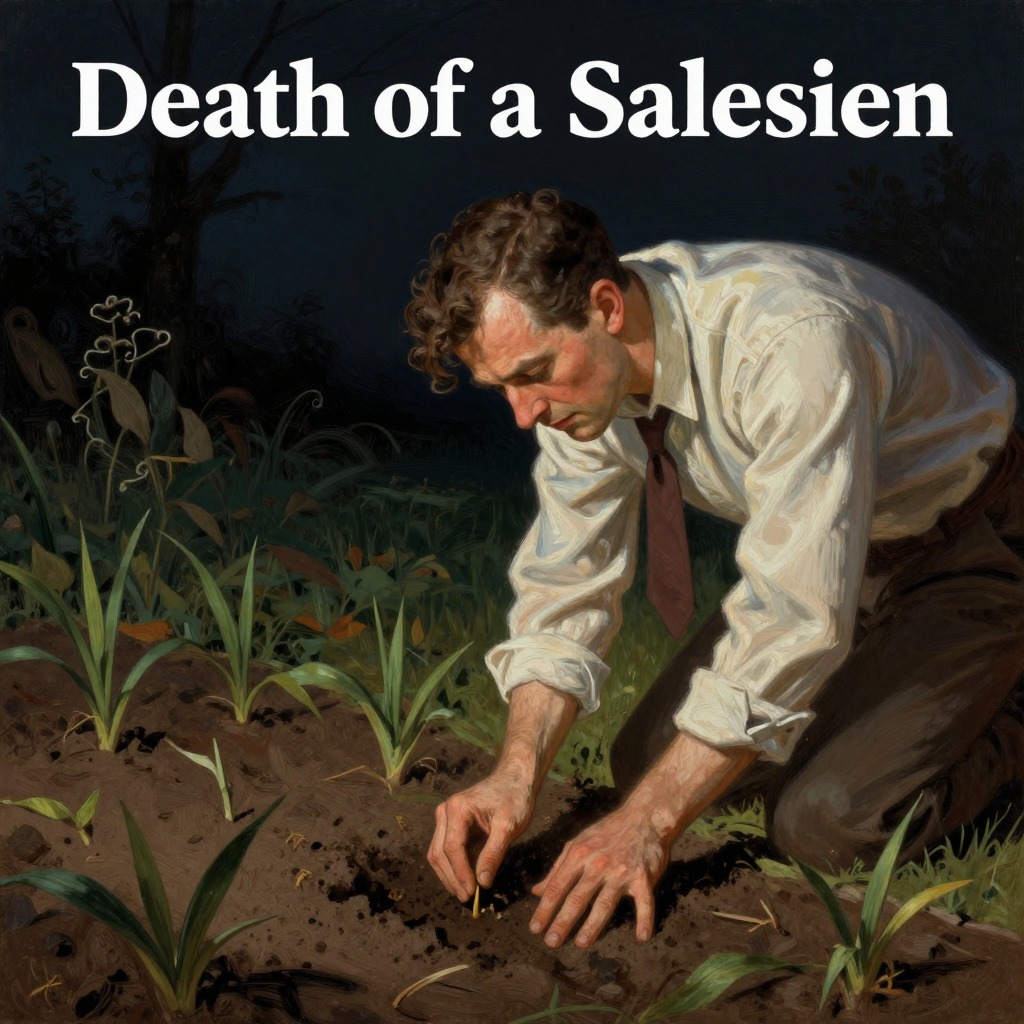
Ben appears only in Willy's memory and imagination, never in the present action of the play. He is first conjured during a card game with Charley, when Willy, exhausted and confused, mistakes Charley for Ben. Ben enters the forestage carrying a valise and umbrella, glancing at his watch, always in a hurry. He has come to say good-bye before boarding a ship for Alaska, where he has bought timberland and needs a man to look after things. He offers Willy a chance to join him, but Linda intervenes, insisting Willy has a beautiful job. Ben dismisses her concerns with a laugh, asking "Enough for what, my dear?" He later reappears after Willy has been fired by Howard Wagner, when Willy desperately asks him for the answer to success. In the final scene, as Willy plants seeds in the garden at night, Ben returns to discuss the proposition of a twenty-thousand-dollar insurance payout, weighing whether it is a cowardly thing or a remarkable proposition. He ultimately convinces Willy that the jungle is dark but full of diamonds, and that one must go in to fetch a diamond out. He leaves Willy with the promise that Biff will worship him for it, and Willy rushes off to his death.
Key Actions and Objectives
Ben's primary objective is to pursue wealth and opportunity wherever they lie, without sentiment or hesitation. He tells Willy that opportunity is tremendous in Alaska, and that he should get out of cities full of talk and time payments and courts of law. He demonstrates his philosophy in a brief boxing lesson with young Biff, tripping him and standing over him with the point of his umbrella poised over Biff's eye, then advising: "Never fight fair with a stranger, boy. You'll never get out of the jungle that way." He laughs at Charley's warning that jails are full of fearless characters, retorting, "And the stock exchange, friend!" He is utterly pragmatic, viewing the world as a place to be conquered by force and cunning, not by being well-liked.
Relationships and Conflict
Ben's relationship with Willy is one of admiration, envy, and unresolved longing. Willy remembers Ben walking away down an open road when he was three years and eleven months old, and he has spent his life feeling "kind of temporary" about himself because his father left when he was a baby and he never had a chance to talk to him. Ben is the only man Willy ever met who knew the answers, and Willy constantly seeks his approval and advice. Ben, however, is dismissive and impatient, always glancing at his watch and cutting conversations short. He challenges Willy's faith in being well-liked, asking what he is building and where he can lay his hand on it. Linda is frightened of Ben and angry at him for undermining Willy's contentment, but Ben laughs at her concerns. He has no conflict with Charley, whom he treats with amused contempt, clapping Willy on the back and laughing at Charley's warnings.
Change and Ending
Ben does not change over the course of the play; he remains a static symbol of the success that Willy craves but cannot achieve. His final appearance, however, is decisive. He transforms Willy's vague suicidal impulse into a calculated act of sacrifice, framing the twenty-thousand-dollar insurance payout as a diamond that Biff can hold in his hand. He counters Willy's fear that Biff will call him a coward by suggesting that Biff will instead worship him for it. Ben's last words—"The jungle is dark but full of diamonds"—echo in Willy's mind as he drives off to his death, and the play ends with the flute music that connects Ben to the father who abandoned them both.
Narrative Role and Evaluation
Uncle Ben functions as a foil to Willy Loman, embodying the American dream of self-made wealth and ruthless individualism that Willy has failed to achieve. He is a flat character in Forster's sense, built around a single idea of success at any cost, but he is also a powerful psychological presence, representing the path not taken and the father who abandoned Willy. His appearances are always brief and always leave Willy more desperate and more convinced that he has wasted his life. In the final act, Ben becomes the tempter who rationalizes suicide as a heroic act, transforming Willy's death from a desperate escape into a final, tragic assertion of worth. He is the ghost of the frontier, the voice of the jungle, and the embodiment of a dream that destroys the dreamer.